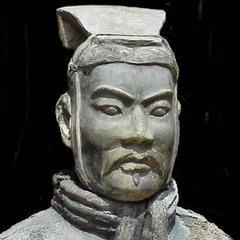
Unlock Victory: Sun Tzu's Quotes on Strategy, Self-Knowledge & Success
In a world brimming with challenges, where personal battles can feel as formidable as any ancient conflict, the wisdom of history's greatest strategists offers an invaluable compass. Few figures resonate through the millennia with the same profound impact as Sun Tzu, the legendary Chinese military general and Taoist philosopher. His seminal work, The Art of War, is far more than a treatise on military tactics; it’s a timeless guide to navigating complexity, understanding human nature, and ultimately, achieving enduring success in all facets of life.
For those seeking to master their minds, overcome adversity, and achieve their goals, delving into Sun Tzu quotes can be a transformative experience. Life, with its unexpected twists and turns, often throws wrenches into our carefully laid plans, leaving us to grapple with negativity and mental anguish. Sun Tzu's philosophy encourages us to look inward, to cultivate self-awareness, and to approach every situation with strategic foresight, turning our minds into our most powerful weapon.
The Enduring Wisdom of Sun Tzu: More Than Just Warfare
Believed to have lived during the Eastern Zhou period (circa 544–496 BCE), Sun Tzu, also known as Sunzi, was likely born into a military family, receiving an education steeped in strategy and philosophy. While his historical existence is debated by some, the profound influence of The Art of War is undeniable. It has transcended military academies to become a staple in boardrooms, sports locker rooms, and personal development libraries worldwide.
The beauty of Sun Tzu's insights lies in their universal applicability. Whether you're facing a tough decision at work, navigating a complex relationship, or striving to achieve a personal ambition, the principles he articulates can illuminate the path forward. His teachings emphasize not just outward conflict, but the internal struggle against self-doubt, fear, and stagnation. They offer a framework for strengthening our mind, body, and spirit, enabling us to embrace every experience – good or bad – as an opportunity for growth and learning.
Pillars of Victory: Strategy and Adaptability
At the heart of Sun Tzu's philosophy lies the profound importance of strategy. He understood that true victory isn't merely about brute force, but about superior planning, foresight, and the ability to adapt. These Sun Tzu quotes offer a masterclass in strategic thinking:
- ���Victorious warriors win first and then go to war, while defeated warriors go to war first and then seek to win.”
This powerful quote underscores the critical role of preparation. Success is not an accident; it's the culmination of careful calculation, thorough planning, and envisioning victory long before any action is taken. In modern terms, it means doing your homework, developing a robust business plan, or meticulously training for a competition. Those who rush into challenges without adequate preparation often find themselves reacting rather than acting, hoping for a win instead of ensuring one. - “Strategy without tactics is the slowest route to victory. Tactics without strategy is the noise before defeat.”
Sun Tzu articulates the indispensable synergy between strategy (the overarching plan) and tactics (the specific actions to execute that plan). A grand vision without concrete steps to achieve it remains a dream, while incessant activity without a clear purpose is merely chaos. Effective strategists understand how to connect their long-term goals with immediate, actionable steps, ensuring every move contributes meaningfully to the larger objective. - “Let your plans be dark and as impenetrable as night, and when you move, fall like a thunderbolt.”
This quote speaks to the power of discretion, surprise, and decisive action. In competitive environments, revealing your intentions prematurely can give adversaries an advantage. Instead, maintain an element of mystery, and when the moment is right, execute your plan with swiftness and overwhelming force. This doesn't mean dishonesty, but rather strategic withholding of information and the ability to act with formidable resolve. - “In the midst of chaos, there is also opportunity.”
A hallmark of great leadership and strategic thinking is the ability to perceive opportunities where others see only disorder. When plans go awry, or unexpected challenges emerge, the wise individual looks beyond the immediate disruption to identify potential advantages. This requires mental flexibility, resilience, and a proactive mindset, transforming setbacks into springboards for innovation and progress.
Actionable Tip: Before embarking on any significant project or goal, dedicate ample time to strategic planning. Define your ultimate objective (strategy), then break it down into smaller, actionable steps (tactics). Regularly review your progress and be willing to adapt your tactics as circumstances change, always keeping your strategic vision in mind.
The Power of Self-Knowledge and Knowing Your Adversary
While external factors are important, Sun Tzu repeatedly brings the focus back to self-awareness and understanding others. This dual insight is foundational to all forms of success:
- “If you know the enemy and know yourself you need not fear the results of a hundred battles.” and “Know thy self, know thy enemy. A thousand battles, a thousand victories.”
These are arguably the most famous Sun Tzu quotes, and for good reason. They encapsulate the essence of preparedness. Knowing yourself means understanding your strengths, weaknesses, capabilities, and limitations. It's about honesty and introspection. Knowing your "enemy" (whether a competitor, a challenge, or even an internal obstacle like procrastination) means understanding its nature, resources, patterns, and vulnerabilities. With both pieces of this vital information, you can make informed decisions, mitigate risks, and exploit advantages, stacking the odds of victory heavily in your favor. - “Appear weak when you are strong, and strong when you are weak.”
This isn't about deception for deception's sake, but about strategic perception management. When strong, appearing weak can lure an opponent into complacency, leading them to underestimate you. Conversely, projecting strength when vulnerable can deter aggression or buy you time to regroup. It requires a deep understanding of psychological warfare and the ability to control narratives. - “If the mind is willing, the flesh could go on and on without many things.”
This quote highlights the incredible power of mental fortitude. Our physical and resource limitations often seem insurmountable, but Sun Tzu reminds us that the human spirit, when fully committed and determined, can overcome extraordinary obstacles. Cultivating a resilient mindset, believing in your capacity to endure, and focusing your will can unlock reserves of strength you never knew you possessed.
Actionable Tip: Conduct a personal "SWOT analysis" (Strengths, Weaknesses, Opportunities, Threats) for yourself and for any major challenge or goal you face. Be brutally honest about your weaknesses and the threats, but also recognize your strengths and potential opportunities. This exercise provides invaluable clarity for strategic decision-making.
The Art of Subtlety and Non-Confrontation
Perhaps the most profound aspect of Sun Tzu's teaching is his emphasis on achieving objectives with minimal conflict, showcasing an elegance in strategy that avoids unnecessary struggle:
- “The supreme art of war is to subdue the enemy without fighting.”
This quote is the pinnacle of Sun Tzu's wisdom. True mastery isn't about direct confrontation, but about outthinking, outmaneuvering, and influencing situations to your advantage so that direct conflict becomes unnecessary. This can involve diplomacy, psychological pressure, economic leverage, or simply presenting such an overwhelming deterrent that an opponent chooses not to engage. It’s about winning before the battle even begins. - “Do not engage an enemy more powerful than you. And if it is unavoidable and you do have to engage, then make sure you engage it on your terms, not on your enemy’s terms.”
This principle stresses risk assessment and strategic positioning. Knowing when to avoid a fight is as crucial as knowing how to win one. If an engagement is unavoidable, the wise individual strives to dictate the conditions – choosing the time, place, and method of interaction – thereby neutralizing the opponent's superior strength by playing to their own advantages. - “Keep your friends close, your enemies even closer.”
This oft-quoted line speaks to the importance of continuous intelligence and understanding. By maintaining proximity to potential adversaries, you can monitor their movements, understand their motivations, anticipate their actions, and even potentially influence them. This vigilance can turn threats into opportunities for neutrality or even alliance.
Actionable Tip: Before entering any conflict, whether professional or personal, consider all avenues for resolution that do not involve direct confrontation. Explore negotiation, compromise, or creative solutions. If conflict is inevitable, meticulously plan how you can control the terms of engagement to maximize your chances of success and minimize risk.
Conclusion
The timeless Sun Tzu quotes from The Art of War offer far more than ancient military advice. They provide a powerful framework for strategic thinking, self-mastery, and achieving success in the complex tapestry of modern life. By embracing the principles of preparation, adaptability, self-knowledge, understanding others, and the art of subtle influence, we can transform challenges into opportunities. Sun Tzu's wisdom reminds us that many of life's toughest battles are won or lost in the mind, long before any action is taken. By honing our strategic intellect and cultivating inner strength, we can unlock our full potential and navigate the path to victory, whatever our personal definition of success may be.